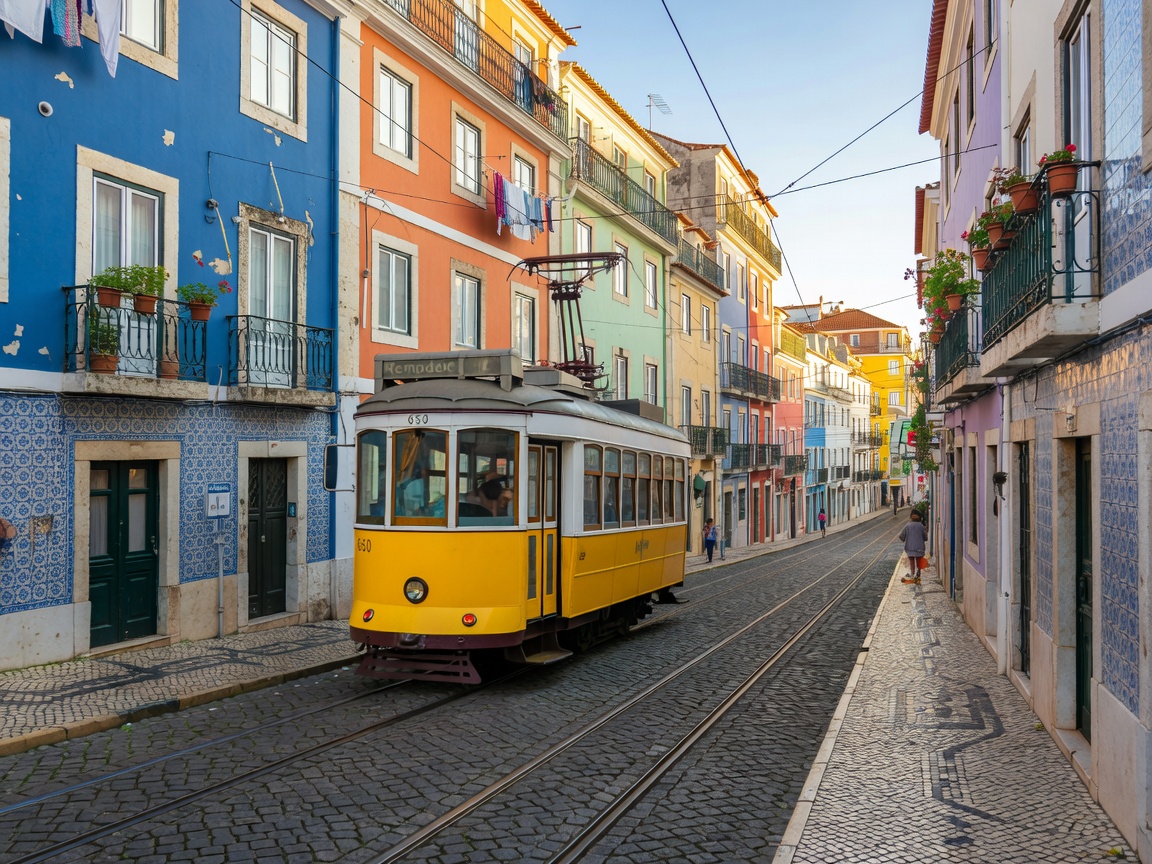
Day one: Baixa, Alfama and the river
Start at Praça do Comércio, where the broad waterfront gives you an immediate sense of the city. Walk uphill through Baixa toward Rossio, then take the quieter route through Mouraria into Alfama. The lanes are steep and uneven; trainers are more useful than stylish but slippery shoes. Stop at Miradouro de Santa Luzia and Portas do Sol before continuing to the castle area.
Lisbon’s tiled façades are part of its appeal, but the city is also a food destination. A quick bifana sandwich may cost €4–€7, while a traditional lunch with grilled fish, sides and a drink often lands around €15–€25. Try to eat lunch at local hours, roughly 12:30–14:30, rather than waiting for a late tourist dinner. In the evening, walk the riverfront toward Cais do Sodré. Pink Street is lively but loud; nearby bars in Santos are a calmer choice.
Day two: Belém and contemporary Lisbon
Go to Belém early for the Jerónimos Monastery and riverside monuments. Timed entry is worthwhile in high season. The area is separated from the centre, so combine its sights in one half-day. The Pastéis de Belém bakery is famous, though many neighbourhood bakeries make excellent versions without the queue. Return by tram or bus, then spend the afternoon around Chiado, Príncipe Real and Avenida da Liberdade.
For shopping, browse independent ceramics, stationery and Portuguese fashion in Príncipe Real. LX Factory is attractive for design shops and restaurants, but it is more destination complex than hidden local secret. Dinner in Graça or Estrela generally gives better atmosphere than eating beside the main squares. Fado is worth hearing when performed with care; book a small venue and avoid shows that promise a rushed dinner plus entertainment at an inflated price.
Day three: a choice beyond the centre
With a third day, take the train to Sintra only if you are prepared for crowds and a full day. Pena Palace and the Moorish Castle require uphill walking and timed planning. Alternatively, remain in Lisbon: visit the Calouste Gulbenkian collection, explore Campo de Ourique market or take a long walk from Alcântara to the waterfront. The second option is less ambitious and often more relaxing.
Lisbon remains one of Europe’s better-value capitals, but accommodation prices rise sharply in summer. Stay near Baixa or Avenida for convenience, or choose Estrela for a residential feel. Metro and buses are inexpensive; use official transport cards and do not block tram entrances for photographs. The city’s best luxury is simple: a miradouro at golden hour with no appointment afterward.